
Epoxy flake floors hide dirt, tire marks, and small imperfections better than a solid color floor, while a solid color finish gives you a cleaner, more uniform look that shows off your garage’s lines. If you’re weighing epoxy flake vs solid color garage floor options for your Northern Arizona home, the right pick comes down to how much upkeep you want to do and the look you’re going for.
What’s the Difference Between Epoxy Flake and Solid Color Floors
Both options start with the same base, a two-part epoxy resin applied over properly prepped concrete. What happens on top of that base coat is where the two systems split.
Epoxy Flake Floors
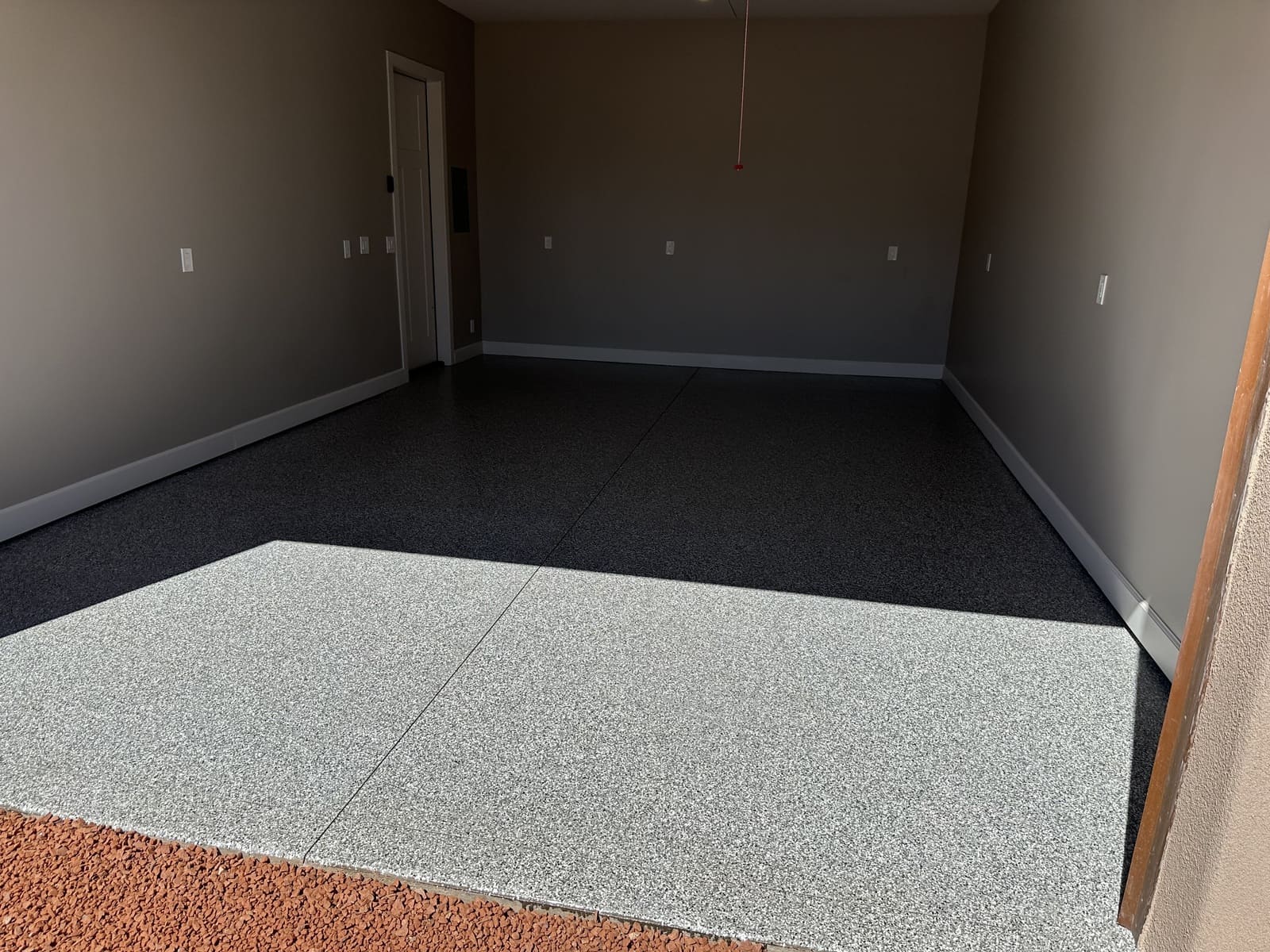
Flake floors get colored vinyl chips broadcast into the wet epoxy base coat, then sealed under a clear topcoat. You can pick a single color blend or mix several colors for a granite-like or speckled look. The chips add texture and depth that a flat color can’t match.
Flake size makes a real difference in the finished look. Larger chips give you a bolder, more textured surface, while a fine blend reads more like natural stone from a distance. We carry several standard blends and can mix custom color combinations if you’re trying to match a specific look or coordinate with your home’s exterior.
Solid Color Epoxy Floors
Solid color floors skip the chips and use a single pigmented color straight through, sometimes finished with a clear topcoat for extra shine and protection. The result is a smooth, uniform surface that looks closer to polished concrete than a speckled finish. For a deeper look at how these systems compare to polyaspartic coatings, our polyaspartic vs. epoxy floor coating guide breaks down the chemistry side of things.
Which Looks Better in a Garage
This one comes down to personal taste, but there are practical differences worth knowing before you decide.
Flake floors do a better job hiding dirt, dust, and small scuffs between cleanings, which matters if your garage doubles as a workshop or gets a lot of foot traffic. The multi-color blends also hide minor imperfections in the concrete better than a solid color does. Our recent flake installation in Sedona shows what a custom blend looks like once it’s finished.
A lot of homeowners also like that flake hides the seams and minor texture differences that show up on larger garage floors, since the pattern breaks up the surface instead of drawing attention to one continuous flat plane. That’s part of why flake tends to be the more popular choice for two and three car garages.
Solid color floors give you a cleaner, more modern look that works well if you keep your garage tidy or use it as extra living space, like a home gym or hangout area. The tradeoff is that scuffs, tire marks, and small chips show up more easily on a single flat color, especially in lighter shades.
If resale value is part of your thinking, both finishes photograph well and read as an upgrade to buyers, but flake tends to have broader appeal since it looks intentional and doesn’t show the kind of wear that can make a solid color floor look dated after a few years of hard use.
Durability and Long-Term Performance
Both systems hold up well when installed correctly, but they don’t perform identically across every category. Here’s how they stack up.
| Factor | Epoxy Flake | Solid Color |
|---|---|---|
| Typical Lifespan | 10 to 20 years | 10 to 20 years |
| Hides Dirt and Scuffs | Hides well between cleanings | Shows dirt and dust faster |
| UV Fading | Multi-tone blend hides fading | Fading more visible on a flat color |
| Hot Tire Pickup Resistance | Good with a proper topcoat | Good with a proper topcoat |
| Chip or Crack Visibility | Blends hide it well | Chips and cracks stand out more |
For more on how long these coatings actually last in Northern Arizona’s climate, we cover the full breakdown in our epoxy flooring lifespan guide.
Cost and Installation Time
Price is usually the deciding factor once looks and durability are settled. Here’s what typically separates the two.
| Factor | Epoxy Flake | Solid Color |
|---|---|---|
| Average Cost | Higher, extra broadcast step | Lower |
| Installation Time | 1 to 2 days | 1 to 2 days |
| Topcoat Passes | Base coat plus a clear topcoat | Often just one clear topcoat |
| Best Fit | Workshops and high traffic garages | Clean, showroom style spaces |
Day to Day Maintenance
Neither floor needs much work to stay looking good, but the routines differ slightly. Flake floors hide grime between cleanings, so you can go longer without sweeping and still have it look decent. Solid color floors show dust and footprints faster, so they need more frequent sweeping or a quick mop to keep that clean look.
Both finishes clean up the same way, a broom for daily dirt and a mild floor cleaner with warm water for a deeper clean. Skip harsh degreasers on either finish unless you’re dealing with a real chemical spill.
If a solid color floor starts looking worn before you’re ready to redo the whole thing, a fresh topcoat can often restore the shine without stripping the base coat. Flake floors can get the same kind of topcoat refresh, though the flake pattern itself will still show whatever fading happened underneath.
Which One Should You Choose for Your Northern Arizona Garage
If you’re in Prescott and want a floor that hides dust from monsoon season and daily driveway grit, flake is usually the better call. Our epoxy chip floor systems in Prescott page has color and blend options built for exactly that kind of use.
Sedona homeowners dealing with intense sun exposure often lean toward flake as well, since the multi-tone blends hide fading better over time than a single flat color. Take a look at our epoxy chip floor systems in Sedona page to see the options available for that climate.
If you want a broader look at flake, solid color, and every other option we install, our epoxy floor systems page covers the full lineup along with what to expect during installation.
Commercial spaces usually lean solid color or a simple flake blend for a clean, professional look, especially in showrooms and offices where a busy pattern can feel distracting.
Still not sure which one fits your garage? A free estimate includes a look at your concrete, a rundown of blend and color options, and honest input on which system makes sense for how you actually use the space.
Making the Right Call on Epoxy Flake vs Solid Color Garage Floors
There’s no wrong answer between epoxy flake vs solid color garage floors, it really comes down to how much hiding power you want against dirt and wear versus how clean and uniform you want the finish to look. Either option gives you a durable, easy to maintain floor when it’s installed right.
Whatever you choose, the crew at Northern Arizona Epoxy installs both finishes the same way, with real concrete prep and a No-Surprise Guarantee so what we quote is what you pay. Give us a call at 928-821-1485 for a free estimate and we’ll help you figure out which one fits your garage best.